
 English English
 Views: 0 Author: Site Editor Publish Time: 2026-03-05 Origin: Site


Every dog owner knows the feeling. You bring home a brand-new toy, your dog looks at you with pure joy, and thirty minutes later it's in pieces on the living room floor. If your dog treats every toy like a personal challenge, you're not alone—and you're probably wondering if a truly durable dog toy for aggressive chewers actually exists.
The good news? Yes. The bad news? Not all toys marketed as "tough" or "indestructible" live up to the label. Choosing the wrong one wastes money and, more importantly, can put your dog at risk if they swallow broken pieces.
This guide breaks down everything you need to know: what makes a dog toy genuinely durable, which materials hold up best, and how to find the right fit for your specific dog. By the end, you'll know exactly what to look for—and what to avoid.
Before diving into toy types, it helps to understand why some dogs chew harder than others. Aggressive chewing usually comes down to a few key factors:
Breed instinct. Retrievers, terriers, and working breeds are hardwired to use their mouths. Chewing is natural behavior, not a bad habit.
Teething. Puppies between 3 and 6 months chew constantly to relieve gum discomfort as their adult teeth come in.
Boredom or anxiety. Dogs left alone for long periods often chew to self-soothe or burn off energy.
Age and jaw strength. Large breeds have significantly stronger bite forces than small ones. A toy that lasts weeks for a Beagle might last minutes for a Rottweiler.
Knowing the "why" helps you choose smarter. A teething puppy and an adult Mastiff need very different solutions.
The durability of a chew toy comes down to three things: material, construction, and design. Here's how each one plays a role.
This is the most important factor. The most common materials used in dog toys for aggressive chewers are:
Material | Durability | Best For | Notes |
|---|---|---|---|
Natural Rubber | Very High | All chewer types | Safe, flexible, food-grade options available |
Nylon | High | Heavy chewers | Hard texture helps clean teeth |
Rubber + Nylon Mix | Very High | Power chewers | Combines flexibility with hardness |
E-TPU | High | Active/fetch play | Lightweight, high-rebound, eco-friendly |
Rope/Fabric | Low–Medium | Moderate chewers | Not recommended for aggressive chewers |
Plush/Stuffed | Low | Gentle chewers | Tears apart quickly under heavy chewing |
For aggressive chewers, natural rubber and rubber-nylon hybrid options consistently outperform other materials. They're tough enough to withstand serious chewing, yet flexible enough to avoid damaging your dog's teeth.
Solid construction matters just as much as raw material. Single-piece designs—with no seams, stitching, or glued-on parts—hold up far better than multi-component toys. The fewer attachment points, the fewer failure points.
Shape influences how long a toy lasts. Toys shaped like bones or dumbbells are especially effective for aggressive chewers because the raised surfaces keep dogs engaged while distributing bite pressure more evenly across the toy. Hollow or treat-dispensing designs also extend playtime by giving dogs a reason to keep coming back.
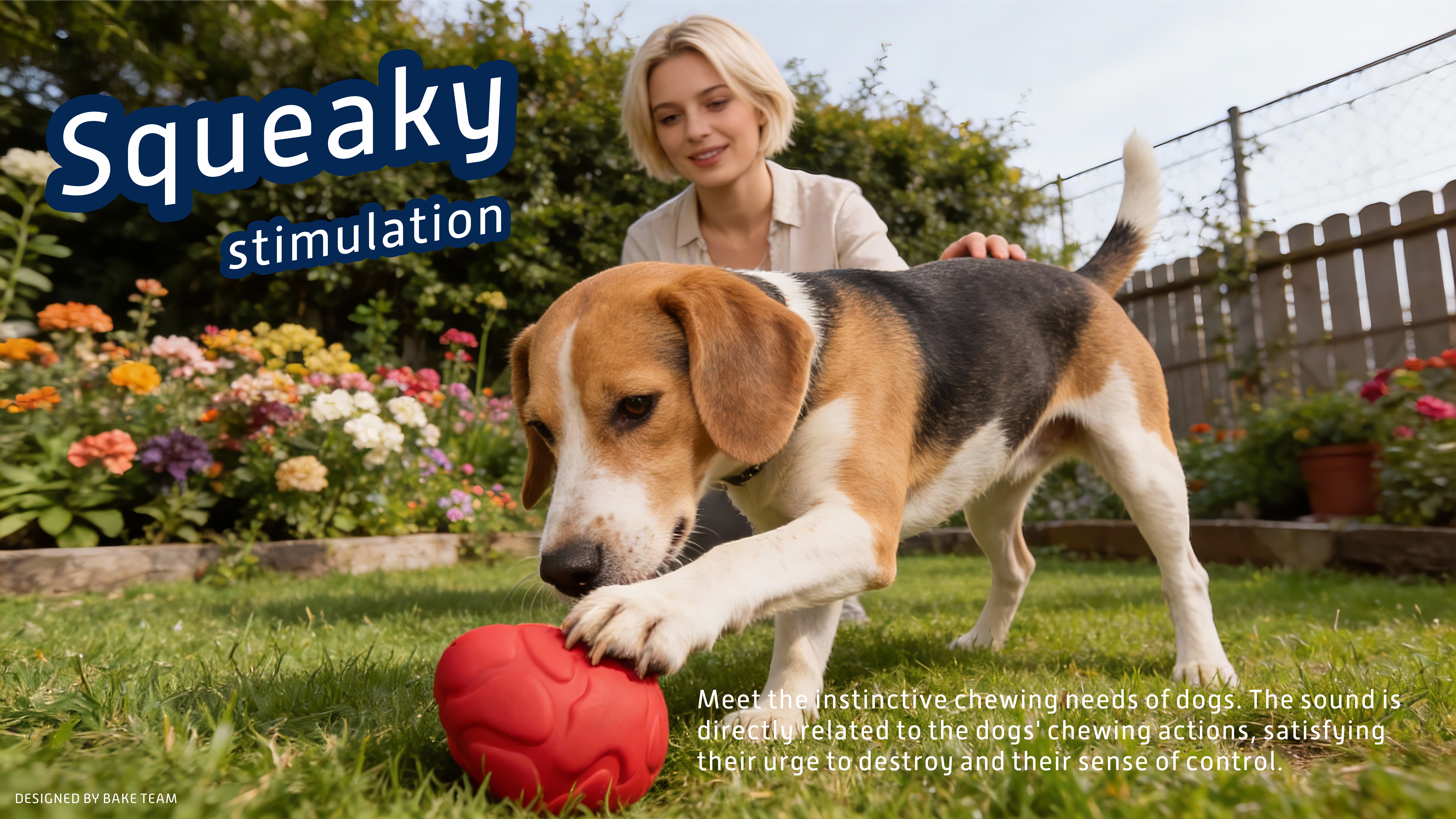
Natural rubber is the gold standard for aggressive chewers. It's firm enough to withstand serious jaw pressure, flexible enough not to crack, and safe for dogs even when chewed extensively. Food-grade rubber poses no risk to your pet, making it a go-to choice for pet owners and vets alike.
BAKE's range of natural rubber chew dog toys is a strong example of this category done right. Their chew toys are anti-bite, elastic, and crafted to align with a dog's natural tooth shape. Some designs even have hollow centers or serrated sections where you can tuck in treats—giving your dog a dual purpose toy that keeps them busy longer.
Key benefits of natural rubber chew toys:
Meets food-grade safety standards
Resists tearing and cracking under heavy use
Gentle on teeth and gums
Easy to clean
For the most determined chewers, a rubber-nylon hybrid offers an extra layer of toughness. Nylon adds rigidity while rubber provides flex, creating a toy that holds its shape under sustained pressure. These toys also tend to have textured surfaces that naturally clean teeth and massage gums as your dog chews.
The bone shape is popular for good reason—it fits naturally in a dog's mouth, encourages healthy chewing patterns, and feels satisfying to gnaw on. BAKE's durable dog bone-shaped teething chew toy, for instance, is modeled after a dumbbell and made from solid natural rubber. The raised portions on the trunk are gentle enough for puppy teeth, while the overall density makes it a reliable option for adult dogs too.
Specifications at a glance:
Feature | Detail |
|---|---|
Material | Natural Rubber |
Size | 180 × 52 × 51mm |
Weight | 220g |
Color | Optional / Customizable |
Best For | Teething puppies and aggressive adult chewers |
E-TPU (Expanded Thermoplastic Polyurethane) is a newer material gaining traction in the pet toy space. It's lightweight, highly resilient, and eco-friendly. These toys bounce back quickly after being compressed, which makes them great for fetch as well as chewing. While not quite as dense as solid rubber, high-quality E-TPU toys hold up well against moderate-to-heavy chewers and are easier to carry around.
Let's be honest about the term "indestructible." No dog toy is truly indestructible. Dogs are remarkably good at destroying things, and a toy that lasts forever hasn't been invented yet. Even BAKE's product notes acknowledge this directly: "No dog toy is indestructible, and every dog interacts with its toys differently."
That said, there's a meaningful difference between a toy that lasts 10 minutes and one that lasts months. The right indestructible dog toys for aggressive chewers are those designed to outlast the average play session—repeatedly—without breaking into dangerous pieces.
Here's what to look for when shopping:
Feature to Check | Why It Matters |
|---|---|
Single-piece construction | Fewer break points = longer lasting |
Food-grade materials | Safe if chewed through |
Manufacturer safety notes | Reputable brands acknowledge limitations |
Size rating for your dog | Too small = choking hazard |
Supervised use recommendation | Even tough toys need monitoring |
Not every aggressive chewer is the same. A toy that works for a Labrador may frustrate a Chihuahua—or disappear in seconds under a Great Dane. Use this quick guide to find the right match:
Dog Size | Recommended Toy Type | Material |
|---|---|---|
Small (under 20 lbs) | Smaller rubber chews, rope with supervision | Soft rubber, nylon |
Medium (20–50 lbs) | Bone-shaped rubber toys, hybrid chews | Natural rubber, nylon mix |
Large (50–90 lbs) | Dense rubber bones, dumbbell-style toys | Thick natural rubber |
Giant (90+ lbs) | Heavy-duty rubber or nylon, oversized bones | Reinforced rubber, nylon |
Always match the toy size to your dog. A toy labeled for large breeds can become a choking risk for smaller dogs, and one designed for small dogs will be destroyed almost immediately by a powerful chewer.
Even the toughest toys benefit from a bit of care. A few habits can significantly extend the life of your dog's favorites:
Supervise playtime. Don't leave aggressive chewers alone with a toy for extended periods. When they're done playing, put the toy away.
Rotate toys regularly. Keeping a rotation of two or three toys prevents your dog from hyperfocusing on one until it breaks.
Check for damage often. Inspect toys before each play session. If a piece has cracked, splintered, or broken off, replace the toy immediately.
Add treats to extend interest. Toys with hollow centers or ridges hold treats well, giving your dog more reason to interact gently rather than attacking.
Choose the right size. When in doubt, size up. A toy that's slightly too big is far safer than one that's too small.
What is the best material for dog toys for aggressive chewers?
Natural rubber is widely regarded as the best material for aggressive chewers. It's durable, flexible, non-toxic, and won't splinter. Rubber-nylon hybrid toys offer an even harder option for the most powerful biters.
Are natural rubber dog toys safe if swallowed?
High-quality natural rubber toys made to food-grade standards are non-toxic. However, no chew toy should be left with a dog unsupervised, as large chunks of any material can cause digestive blockages if swallowed.
How often should I replace my dog's chew toy?
Replace any toy as soon as it shows signs of cracking, deep gouging, or has broken into pieces. Even high-quality rubber toys have a lifespan, especially under heavy use.
Can puppies use toys designed for aggressive chewers?
Yes, but choose a toy specifically suited to their size and jaw strength. Bone-shaped natural rubber toys with raised, gentle surfaces are ideal for teething puppies—they relieve gum discomfort without being too hard on developing teeth.
What's the difference between a chew toy and a dental chew?
Dental chews are typically consumable treats designed to be eaten. Chew toys are reusable objects designed for repeated play. For aggressive chewers, durable rubber toys are a safer long-term option than edible chews, which can be consumed too quickly.
A dog that chews aggressively isn't a problem to be solved—it's a natural behavior to be redirected. The right dog toy for aggressive chewers channels that energy safely, protects your furniture, supports dental health, and keeps your dog genuinely entertained.
Focus on natural rubber or hybrid materials, choose bone or dumbbell shapes that align with your dog's chewing patterns, and always prioritize size-appropriate options. Supervised play and regular toy inspections will extend the life of even the toughest toys.
Browse BAKE's full range of chew dog toys to find durable, food-grade options built specifically for dogs who play hard.


